
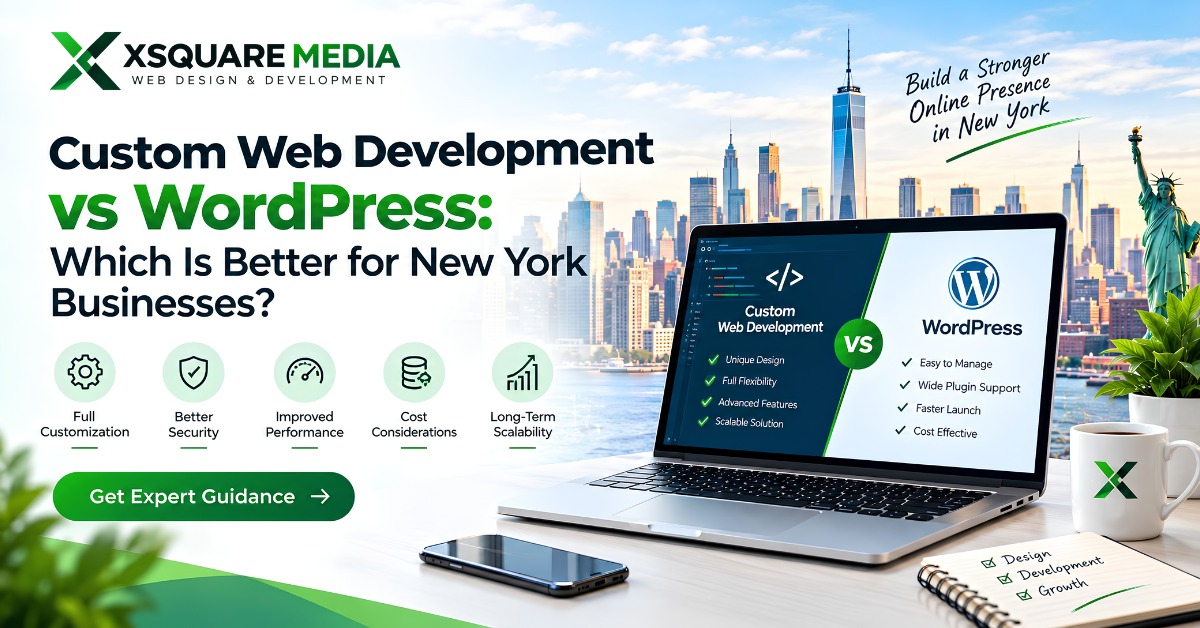
Doing business in New York is tough, no way around it. Customers decide fast, and the first look they get at you is usually your website. That makes the platform choice a big deal. Take WordPress, which is ready-made, or go with custom web development?
Neither one is bad. But think about it: a bakery down the street in Brooklyn and a financial firm in Manhattan aren't after the same thing at all. Below is how they compare, so you can match it to what you're aiming for.
What Is Custom Web Development and How Does It Work?
Custom web development simply means a site built from zero, only for your brand. Templates? Not here. The developers write original code that follows your design, how your business actually works, and whatever security you require.
Because of custom web development, all the code is yours. Your pages don't get weighed down by features you never asked for, and no template says no to your ideas. How users experience the site is up to you, and growing later isn't a problem either.
Why Do Many New York Brands Start With WordPress?
Over 40% of websites on the internet run on WordPress. It's open-source and works as a content management system, so templates, themes and plugins are sitting there waiting. Launching takes very little time.
Cost is the big draw for new businesses, since it's cheaper to begin with. Write a blog, add a page, replace an image, all without touching code. Trouble comes later. Once the business gets bigger and the third-party plugins have stacked up, speed drops and security risks creep in.
How Do Custom Web Development and WordPress Compare Head-to-Head?
A quick feature-by-feature look:
Feature | Custom Web Development | WordPress |
Design & Features | 100% unique, made to fit your brand | Comes from pre-made themes and plugins |
Loading Speed | Fast, since the code is clean | Gets slower as plugins add up |
Security Level | Well protected through custom architecture | Open to plugin exploit attacks |
Scalability | No limit on custom tools | Capped by what the theme framework allows |
Upfront Cost | Higher initial investment | Lower, budget-friendly start |
Which Option Delivers Better Security and Speed in Competitive Markets?
New Yorkers want pages to open in under two seconds. If yours drags, the visitor is already on a competitor's site.
Custom web development hands you full control over performance. Without useless background scripts and heavy plugin files, the site stays light and quick. Security follows the same logic. Custom-built sites are a lot tougher to hack, because they don't sit on open-source code that automated hacking tools keep targeting.
What Are the Long-Term Costs of Both Approaches?
The first price can fool you. Better to check what owning the site really costs across time:
Cost Factor | Custom Web Development | WordPress |
Initial Investment | Higher upfront cost | Low initial setup expense |
Maintenance Needs | Low, updates are predictable | Plugin and theme updates never end |
Security Tools | Custom security comes built in | Extra security plugins are needed |
Long-Term Value | High long-term return on investment | A full redesign may be needed later |
Yes, WordPress costs less on day one. Over time, though, premium plugins, bug fixes and security monitoring keep adding up, and the total gets big.
When Should Your Business Choose Custom Web Development?
Pick custom web development when you need custom portal features, unique databases, top-level security, or speed good enough to win in search rankings. Established brands fit here, as do e-commerce stores with their own purchasing steps and startups that are growing quickly.
WordPress is the better pick for simple blogs, early-stage testing, or a small service business that wants a basic online brochure fast.
Final Thoughts
It all depends on your current stage and what you want later. Need a simple site quickly on a small budget? WordPress gets it done. Want a fast, secure, unique website that scales without limits? Then investing in custom web development is the smarter long-term decision. And when you're ready to stand out in the busy New York market with a site built around your vision, partner with XSquare Media to build a high-performing site that grows your business.
Follow XSquare Media on Facebook and Instagram for the latest web design tips, digital marketing insights, SEO updates, and business growth strategies.
Frequently Asked Questions (FAQs)
1. Is custom web development better than WordPress for SEO?
Yes. Search engine bots crawl and index pages faster when the code is clean and custom, and that gives local search rankings a better foundation.
2. Can a WordPress site handle heavy web traffic?
It can, but not for free. You need premium hosting, heavy caching and nonstop performance tuning, or the server may crash.
3. Is custom web development hard to manage without technical skills?
Not at all. Developers can make you a simple, customized content dashboard, so your team updates content, images and blogs on its own.
4. How long does custom web development take compared to WordPress?
Expect 6 to 12 weeks to design and launch a custom project. A basic WordPress site is often done in 2 to 4 weeks.
5. Which choice offers better mobile performance?
Both can be mobile-friendly. With custom web development, though, you build the exact mobile journey you want, and theme layout bugs stay out of it.
6. Are WordPress plugins safe to use?
Most reputable ones are. Outdated or abandoned plugins are the real problem, and they cause the majority of security breaches.
7. Can I switch from WordPress to a custom site later?
Yes. A lot of businesses start on WordPress to validate the idea, then upgrade to custom code when theme limits begin to hold them back.
8. What happens if a WordPress plugin breaks after an update?
Your layout can fall apart or features can stop working. After that you either troubleshoot, revert the update, or hire a developer to fix the conflict.
9. Does custom web development require higher maintenance costs?
Usually no. Constant plugin updates and compatibility conflicts aren't part of the picture, so keeping the site running long-term is simpler.
10. How do I decide which option fits my current budget?
Strict budget and simple needs: go with WordPress. Website directly driving your leads and sales: invest in custom development.